Why Engineering Knowledge Walks Out the Door
Why Engineering Standardization Often Fails—and How to Make It Stick
Engineer-to-Order Doesn't Have to Mean Starting from Scratch
 LOGIN |  REGISTER

Best Practices & Standards

Make Standards, Reuse, and Best Practices Stick

Most companies already know what they want to achieve: standardization, modularity, DFMA, reuse, and knowledge-based engineering.

The challenge is execution.

Too often, standards live in documentation, training materials, review checklists, or individual experience rather than inside the design process itself. They depend on people remembering what to do, applying rules consistently, and catching mistakes after the design is already created.

That approach does not scale.

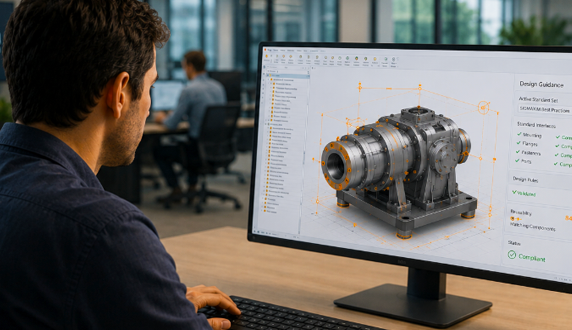
SIGMAXIM changes where standardization happens by embedding corporate engineering intent directly into the Creo design process.

The Challenge: Standards That Live Outside the Design Process

Engineering standards often fail because they are enforced too late.

By the time a design reaches review, manufacturing, PLM, or downstream systems, noncompliant geometry, missing metadata, inconsistent features, and incorrect assumptions may already be built into the model.

This leads to:

  • Rework
  • Delays
  • Inconsistent data
  • Reduced reuse
  • Extra review cycles
  • Dependence on tribal knowledge
  • Difficulty supporting global teams
  • Loss of design intent over time

As teams change and products evolve, knowledge that once lived in people's heads can disappear. Legacy models become harder to interpret, and the reasoning behind past decisions is often lost.

Standardization Built Into the Design Process

With SIGMAXIM, standards and best practices stop being recommendations and become executable rules.

Instead of relying on engineers to interpret documentation or correct designs later, SIGMAXIM applies your company's standards during model creation inside Creo.

This means:

  • Standards are applied automatically
  • Best practices are enforced by default
  • Noncompliant designs are prevented unless intentionally overridden
  • Engineering knowledge is captured as logic, not just documentation
  • Teams design within an approved, controlled solution space

The result is consistent, compliant design output across engineers, products, teams, and locations.

From Guidelines to Guardrails

SIGMAXIM helps companies transform engineering intent into rules that actively guide the design process.

These rules can define what is allowed to exist in a model, including:

  • Allowable geometry and features
  • Modular interfaces
  • Product structures
  • Manufacturing requirements
  • DFMA requirements
  • Parameters and metadata
  • Reuse standards
  • Company-specific best practices

Engineers remain in control, but the system guides and protects the process. It does not lock users into a black box. It helps ensure that every design follows the approved path unless an intentional exception is made.

Controlled Flexibility

Standardization should not eliminate engineering judgment.

With SIGMAXIM, engineers work within a rule-defined solution space where variability is intentional, but bounded.

Master models define structure and intent. Libraries contain governed components. Rules determine valid combinations, features, and outputs. Invalid states are structurally prevented rather than discovered later.

The result is consistency without rigidity.

Engineers remain free to innovate while the system ensures designs stay aligned with corporate standards and best practices.

Enterprise-Ready Engineering Data

When standards are enforced at design time, the result is more than better CAD.

It is engineering data that downstream systems can trust.

By embedding rules and logic directly into the design process, SIGMAXIM helps ensure that geometry, features, parameters, and metadata are consistent by design—not corrected later through inspection or cleanup.

This creates data that is:

  • Consistent across engineers, teams, and global sites
  • Easier to interpret long after the original designer is gone
  • Safer to reuse, modify, and scale
  • Better prepared for PDM, PLM, manufacturing, and downstream systems
  • Less dependent on manual validation and rework

Instead of enterprise systems managing exceptions and workarounds, they receive engineering data that is already structured, compliant, and ready to use.

How RulesPerfect™ Makes Standardization Stick

SIGMAXIM's RulesPerfect™ methodology creates a controlled engineering environment where defined engineering rules are satisfied during design creation.

Rules are not simply validated after a design is complete—they govern how the design is created from the start.

In practice, this means:

  • Products are generated within a rule-defined solution space
  • Valid designs resolve to compliant geometry, features, and metadata
  • Compliance is preserved across allowed variability
  • Complexity does not create uncontrolled exceptions
  • Rules execute as logic within the Creo environment

RulesPerfect™ is not a separate workflow. It is the underlying method that makes long-term consistency possible.

A System That Evolves With You

Standardization is not a one-time project.

Products evolve. Variants increase. Manufacturing constraints shift. Regulations change. Teams change. Knowledge must persist.

SIGMAXIM is designed for that reality.

You can start small, add rules over time, expand automation as needed, and remain in control of your standards as your business changes.

Everything is tailored to your company because no two organizations engineer the same way.

This is not a rigid framework. It is a living system designed to evolve with your products, teams, and standards.

Key Benefits

  • Make corporate standards enforceable
  • Apply best practices automatically
  • Reduce rework and review cycles
  • Improve design consistency
  • Preserve engineering knowledge
  • Support reuse and modularity
  • Reduce dependence on individual experts
  • Create consistent, enterprise-ready data
  • Improve confidence in downstream systems
  • Scale standards across teams, products, and global sites

Ready to Move Beyond Documentation and Design Reviews?

Standards, modularity, reuse, DFMA, and knowledge-based engineering only deliver value when they become part of the design process itself.

SIGMAXIM embeds corporate engineering intent directly into Creo, helping organizations create compliant, consistent, and enterprise-ready engineering data from the start.

Contact SIGMAXIM today to see how RulesPerfect™ and Creo automation can help your standards become part of how engineering work actually gets done.
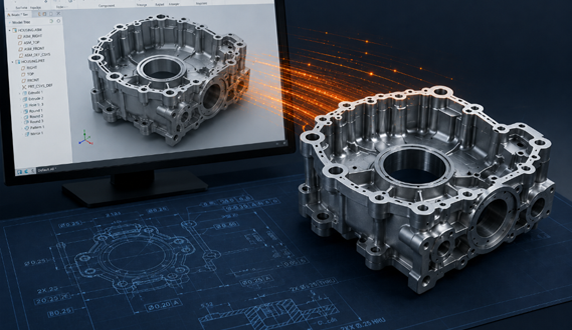
Engineer-to-Order (ETO) Product Automation

Creo Automation for One-Off Products—Yes, It Really Works

If you build Engineer-to-Order (ETO) products, you've probably heard some version of the same message:

"Your products are too custom to automate."

It's one of the biggest misconceptions in engineering.

The reality is that automation doesn't have to be all-or-nothing.

With SIGMAXIM SmartAssembly, manufacturers can automate whatever portion of the design process makes sense—from specific features and assemblies to large portions of a complete product—while leaving the remaining work in the hands of engineering.

The result is a practical, scalable approach to automation that works even for highly customized and one-off products.

Automate What Makes Sense

Traditional automation often assumes every product follows a predictable path.

ETO products rarely do.

That's why SmartAssembly allows organizations to automate whatever portion of the design process provides value—whether that's 30%, 50%, 70%, or 90% of the model.

Engineers remain in control while repetitive tasks, standard features, calculations, and design rules are handled automatically.

This flexible approach delivers meaningful productivity gains without forcing products into rigid templates or predefined configurations.

The Reality of ETO Work

Engineer-to-Order environments are often considered impossible to automate.

Every project is different. Customer requirements change. Exceptions appear constantly. And many automation approaches fail because they're built around rigid templates and predefined configurations.

As a result, engineers often spend valuable time:

  • Rebuilding similar features and assemblies
  • Fixing inherited geometry from previous designs
  • Copying and modifying old models
  • Maintaining fragile template-based systems
  • Repeating calculations and engineering decisions
  • Interpreting undocumented tribal knowledge

Lead times grow, workloads increase, and consistency becomes difficult to maintain.

The result is not only slower engineering—it is greater risk, increased rework, and reduced scalability.

Automation Built for ETO Reality

SmartAssembly uses a rules-driven approach that generates geometry dynamically from your engineering knowledge, formulas, standards, and design rules.

Instead of copying and modifying existing models, SmartAssembly creates new, clean geometry on demand. Models remain consistent, accurate, and free from the inherited issues that often accumulate over years of manual modifications.

The result is automation that adapts to your products—not the other way around.

Rules-Driven Building Blocks

At the core of SmartAssembly is SIGMAXIM's Building Block methodology.

Each product element is automated as an independent Smart Object—a rules-driven component that generates geometry dynamically based on your requirements.

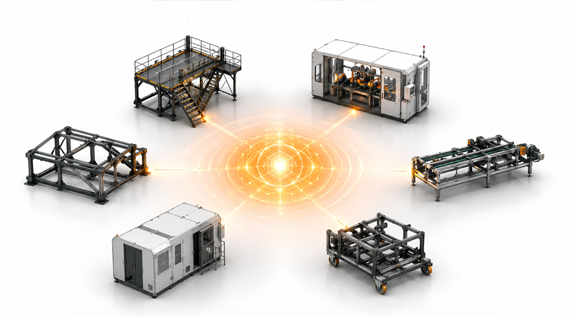
These Smart Objects can be stacked, combined, and reused in virtually any order, allowing new configurations and one-off designs to be created without breaking the automation.

Because the automation is driven by rules rather than rigid templates, it remains flexible enough to support the variability that defines Engineer-to-Order products.

What SIGMAXIM Automation Delivers

SmartAssembly helps organizations automate engineering processes while maintaining complete flexibility.

Capabilities include:

  • Works with truly custom and one-off products—not only repeatable, high-volume designs
  • Creates new, clean models instead of copying and perpetuating old mistakes
  • Generates whatever portion of the model you need, leaving the remaining work to engineering
  • Captures engineering knowledge in rules, reducing reliance on tribal knowledge
  • Automatically creates or checks models into Windchill
  • Supports existing workflows and automation investments
  • Includes Worry-Free Maintenance to ensure compatibility with future Creo releases

Real Business Impact

Organizations using SmartAssembly for ETO applications can achieve:

  • 30–70% reductions in modeling time
  • Faster quoting and delivery cycles
  • Improved design consistency
  • Fewer errors caused by inherited geometry
  • Reduced rework
  • Better knowledge retention
  • Increased engineering capacity without increasing headcount
  • Scalable automation that grows with the business

Most importantly, engineers spend less time recreating previous work and more time solving the unique challenges that differentiate their products.

Built Around Your Process

No two ETO companies design products the same way.

Through our RulesPerfect™ methodology, SIGMAXIM captures your engineering knowledge, design rules, standards, and best practices, transforming them into practical automation that supports the way your team already works.

No major CAD overhaul is required. We build on your existing processes, systems, and investments.

We don't change the way you do things—we automate the things you do.

Scalable, Maintainable, and Future-Proof

With over 20 years of Creo automation experience, SIGMAXIM has helped manufacturers automate products ranging from highly configurable product families to completely unique Engineer-to-Order designs.

Whether you're a small engineering team or a global manufacturer, SmartAssembly scales to support products ranging from relatively simple designs to highly complex ETO environments.

Our Worry-Free Maintenance program ensures your automation continues to work with future releases of Creo, protecting your investment for years to come.

Think Your Products Are Too Custom to Automate?

Many of our most successful customers started with that exact belief.

Today they're using automation to reduce engineering effort, improve consistency, accelerate delivery, and capture valuable engineering knowledge that would otherwise remain trapped in spreadsheets, templates, and tribal knowledge.

Whether your products are configurable, highly customized, or completely unique, SIGMAXIM can help identify where automation can deliver measurable value.

Contact SIGMAXIM today to discover how SmartAssembly can help automate your ETO process—without sacrificing engineering flexibility.

Manufacturing Deliverables Automation

From Design to Production—Automatically

Turn Creo Models into Complete Manufacturing Deliverables

Manufacturing doesn't run on CAD models alone.

It runs on complete, accurate deliverables—drawings, BOMs, manufacturing geometry, CNC outputs, and structured data that downstream systems can trust.

SIGMAXIM's SmartAssembly automates the creation of these deliverables directly within the Creo environment, ensuring that engineering and manufacturing outputs are generated together—not as separate, manual processes.

The Challenge: Getting Designs Ready for Manufacturing

Many organizations spend significant time creating and managing the deliverables required for production. While the CAD model may be complete, the work often continues with manual documentation, BOM preparation, data entry, manufacturing geometry creation, and output generation.

These disconnected processes can lead to:

  • Delays between engineering and manufacturing
  • Inconsistent documentation and data
  • Manual errors and rework
  • Lost productivity
  • Knowledge-dependent processes
  • Data discrepancies between systems

As products become more complex, these challenges become increasingly difficult to manage. Valuable engineering resources are often consumed by repetitive tasks that add little value to the product itself.

The SmartAssembly Solution

SmartAssembly is a rule-based automation platform that standardizes how products are designed and how manufacturing deliverables are created.

By capturing your company's engineering and manufacturing logic, SmartAssembly automatically applies rules as products are designed in Creo. Deliverables are generated in real time, ensuring consistency, accuracy, and compliance with your standards.

Rather than relying on manual steps and disconnected workflows, SmartAssembly creates a seamless Engineering-to-Manufacturing process where design data and manufacturing outputs remain fully aligned from the start.

Complete Manufacturing Deliverables—Automatically

SmartAssembly ensures the information manufacturing needs is created automatically as part of the design process—not as a separate downstream activity.

As engineers create products, SmartAssembly can automatically generate:

Drawings & Documentation

Create standardized, production-ready drawings and documentation that follow company standards and best practices.

BOM & Material Data

Generate accurate Bills of Materials along with costing information, mass properties, shipping dimensions, and structured ERP-ready data.

Manufacturing Geometry & CNC Outputs

Automatically create manufacturing geometry and CNC-ready outputs using rule-driven processes that ensure consistency and accuracy.

MBD & MBE Deliverables

Support modern manufacturing initiatives with fully defined 3D models containing Product Manufacturing Information (PMI) for downstream consumption.

Why It Matters

Most organizations don't struggle to create geometry.

They struggle to create complete, accurate, and usable manufacturing deliverables.

That's where delays, errors, and costly rework often originate.

SmartAssembly eliminates non-value-added engineering work by automating the creation of drawings, BOMs, manufacturing outputs, and documentation—allowing engineers to focus on design, innovation, and continuous improvement rather than repetitive tasks.

The result is:

  • Complete, production-ready outputs
  • Reduced engineering effort
  • Faster, more predictable manufacturing processes
  • Fewer downstream errors and revisions
  • Consistent outputs across teams, products, and locations
  • Improved data quality throughout the organization

Seamless Integration Across Systems

SmartAssembly creates a connected flow of information from engineering through manufacturing by integrating with Windchill, PLM, ERP, CAM, and other enterprise systems.

Because outputs are generated from a common source of truth, engineering, manufacturing, and business systems remain aligned. The result is consistent data, fewer manual handoffs, improved traceability, and greater confidence that every department is working from the same information.

Key Benefits

  • Automatically generate manufacturing deliverables
  • Reduce manual documentation and data-entry tasks
  • Eliminate non-value-added engineering work
  • Improve manufacturing readiness
  • Accelerate Engineering-to-Manufacturing workflows
  • Reduce errors and rework
  • Standardize outputs across teams and locations
  • Support MBD and digital manufacturing initiatives
  • Deliver consistent, production-ready data
  • Integrate with existing enterprise systems

Ready to Deliver More Than CAD Models?

With SmartAssembly, engineering doesn't stop at design. It automatically generates the complete, accurate manufacturing deliverables required to move products into production with confidence.

By embedding your company's rules, standards, and manufacturing logic directly into the design process, SmartAssembly helps eliminate manual effort, reduce errors, and accelerate the flow of information from engineering to manufacturing.

Contact SIGMAXIM today to discover how SmartAssembly can help automate deliverable creation, improve manufacturing readiness, and build a more efficient Engineering-to-Manufacturing process.

Model-Based Definition

Start Today to Be MBD-Ready Tomorrow with SIGMA MBD

Model-Based Definition promises a more connected digital future, where manufacturing information lives directly within the 3D model and flows seamlessly throughout the product lifecycle.

The reality is that successful MBD adoption requires much more than adding annotations to CAD models. Organizations need structured data, standardized processes, consistent engineering practices, and alignment across teams before they can fully realize the benefits of MBD.

Too often, companies wait until they're ready to "go MBD" before discovering how much preparation is required.

SIGMA MBD helps you build that foundation.

Built exclusively for Creo Parametric, SIGMA MBD is a powerful suite of automation tools designed to simplify MBD adoption, improve data quality, standardize engineering practices, and accelerate the transition from traditional drawing-centric workflows to a model-based future.

MBD Is a Journey—Not a Switch

Many organizations view MBD as a single project. In reality, it is an ongoing transformation that impacts engineering, manufacturing, quality, suppliers, and downstream consumers of product data.

Success depends on answering critical questions:

  • Are your models consistent?
  • Is your PMI complete and compliant?
  • Can downstream users trust the information?
  • Are company standards being applied consistently?
  • Can legacy data be leveraged rather than recreated?
  • Are your teams prepared for the transition?

SIGMA MBD helps organizations address these challenges systematically, creating a practical roadmap toward MBD adoption while minimizing disruption to existing workflows.

Improve Quality Before Problems Reach Downstream Teams

The value of MBD depends entirely on the quality of the information contained within the model.

SIGMA MBD's MBD Checker validates models directly inside Creo against more than 300 predefined rules covering PMI, GD&T/GPS requirements, dimensions, notes, symbols, presentation standards, visibility, geometry semantics, and CAD modeling practices.

Potential issues can be identified early, allowing engineering teams to correct problems before they impact manufacturing, quality inspection, suppliers, or customers.

The result is greater confidence in your MBD data, fewer manual reviews, and more consistent deliverables across the organization.

Preserve Existing Investments

Transitioning to MBD does not mean abandoning years of engineering knowledge.

SIGMA MBD helps organizations leverage existing drawings, annotations, standards, and engineering data while moving toward a model-based environment. Automated 2D-to-3D and 3D-to-drawing capabilities support a gradual transition strategy that allows teams to adopt MBD at a pace that makes sense for their business.

Rather than forcing a disruptive change, SIGMA MBD enables organizations to evolve their processes while continuing to support current requirements.

Automate the Work That Slows Adoption

One of the biggest obstacles to MBD implementation is the amount of manual effort required to create, organize, validate, and maintain model-based information.

SIGMA MBD automates many of these repetitive tasks, including:

  • MBD validation and standards checking
  • Annotation creation and management
  • Combined State management
  • PMI color coding
  • PDF deliverable generation
  • Legacy data updates
  • PMI tracking and revision control
  • Context and attribute management
  • 2D-to-3D conversion
  • 3D-to-drawing generation

By reducing manual effort and enforcing company standards automatically, organizations can accelerate adoption while improving consistency and scalability.

A Practical Approach to MBD Adoption

Many MBD initiatives struggle because organizations focus on the destination rather than the preparation required to get there.

SIGMA MBD takes a practical, systematic approach to MBD adoption by helping organizations establish standards, improve model quality, automate repetitive processes, and leverage existing engineering data. Instead of forcing disruptive changes, SIGMA MBD helps companies build a solid foundation that supports long-term success.

Whether your goal is validating PMI, standardizing annotation practices, managing Combined States, converting legacy drawings, or preparing data for downstream consumption, SIGMA MBD provides the automation tools needed to move forward with confidence.

Built Specifically for Creo

SIGMA MBD is designed exclusively for Creo users and integrates directly into the Creo environment.

Because the tools are purpose-built for Creo workflows, organizations can leverage familiar processes while introducing powerful automation capabilities that improve efficiency, consistency, and long-term maintainability.

Whether you're taking your first steps toward MBD or expanding an existing initiative, SIGMA MBD helps transform MBD from a future goal into a practical reality.

Accelerate Your MBD Journey

Model-Based Definition success starts long before the first annotation is created.

Prepare your data. Standardize your processes. Improve model quality. Automate repetitive tasks.

This email address is being protected from spambots. You need JavaScript enabled to view it. and discover how SIGMA MBD can help your organization build a practical, scalable path to MBD—exclusively within Creo.

CPQ: On-Demand Product Build

Turn Product Configuration into Complete Product Definitions

Most CPQ systems are designed to help sales teams configure options, generate pricing, and produce quotes. But for companies with highly configurable, Configure-to-Order (CTO), or Engineer-to-Order (ETO) products, the real challenge begins after the quote is approved.

Configuration is not simply a sales process—it is an engineering process.

SIGMAXIM's On-Demand Product Build solution bridges the gap between Sales and Engineering by automatically generating complete, technically valid product definitions directly from customer requirements and configuration inputs.

The Challenge

Many manufacturers struggle with:

  • Complex products with thousands of possible variations
  • Engineering rules that are difficult to apply consistently
  • The challenge of applying product knowledge across departments
  • Long response times for customer requests
  • Repetitive engineering work spent recreating existing designs
  • Errors caused by manual interpretation of product requirements

As product complexity grows, the traditional handoff between Sales and Engineering becomes slower, more costly, and more prone to mistakes.

The Solution

SIGMAXIM transforms product configuration from a manual process into an automated workflow.

Using your existing engineering knowledge, product rules, and Creo models, the system automatically generates complete product definitions based on customer requirements.

Instead of producing selections that require engineering cleanup, SIGMAXIM creates real, buildable products ready for downstream processes.

Key Benefits

Faster Response to Customer Inquiries

Generate customer deliverables quickly, helping Sales respond faster and improve customer responsiveness.

Consistent Application of Engineering Rules

Ensure company standards, design intent, and engineering knowledge are applied automatically and consistently across every configuration.

Reduced Engineering Workload

Eliminate repetitive redesign activities and allow engineers to focus on product innovation, process improvement, and new product development.

Improved Accuracy

Reduce errors by removing manual interpretation and ensuring configurations comply with defined engineering and manufacturing requirements.

Single Source of Truth

Sales, Engineering, Manufacturing, and Customers all work from the same product definition, improving communication and reducing rework.

Built for Complexity

SIGMAXIM's On-Demand Product Build solution is designed for organizations with highly configurable products, complex engineering rules, and extensive customer deliverables. Whether your products are Configure-to-Order, Engineer-to-Order, or somewhere in between, SIGMAXIM helps transform configuration into complete, accurate, and buildable product definitions.

Ready to Generate Products Instead of Recreating Them?

Discover how SIGMAXIM's On-Demand Product Build solution can help you automate product configuration, improve accuracy, and free engineering resources for higher-value work.

Contact us today to schedule a demonstration and see how SIGMAXIM can transform your product configuration process.