Why Engineering Knowledge Walks Out the Door
Why Engineering Standardization Often Fails—and How to Make It Stick
Engineer-to-Order Doesn't Have to Mean Starting from Scratch
 LOGIN |  REGISTER

Why Engineering Knowledge Walks Out the Door

Every engineering organization depends on them.

The engineers who know why products are designed a certain way. The people who understand the exceptions, the unwritten rules, the historical decisions, and the lessons learned over decades of product development. When a difficult problem arises, everyone knows exactly who to call.

These individuals are often the backbone of the engineering organization—but they can also represent one of its greatest risks.

Many companies don't realize how much of their engineering knowledge exists only in the minds of a handful of experienced employees. Over time, critical information becomes embedded in personal experience rather than in systems, processes, or engineering models. As long as those individuals remain available, the risk is easy to overlook.

Eventually, however, people retire, change roles, move to other companies, or simply become unavailable. When they do, organizations often discover that decades of engineering knowledge have effectively walked out the door.

The challenge is becoming more urgent as many organizations face the retirement of highly experienced engineers whose knowledge has been accumulated over decades. Replacing people is difficult. Replacing years of engineering experience is even harder.

The Hidden Problem of Tribal Knowledge

Most companies have documentation. They maintain procedures, standards, design guides, and training materials. Yet even organizations with extensive documentation often rely heavily on tribal knowledge.

This is the knowledge that never quite makes it into formal systems.

It includes the reasons certain design decisions were made, the lessons learned from previous projects, preferred design approaches, manufacturing considerations, customer-specific requirements, and countless small details that experienced engineers carry with them throughout their careers.

Often, this knowledge accumulates gradually. Small decisions are made over many years, and eventually nobody remembers why a particular approach became the standard. Engineers simply know that "this is how we've always done it."

While tribal knowledge can help organizations move quickly, it also creates significant risk. The more critical knowledge depends on individuals, the more vulnerable the organization becomes.

Why Documentation Alone Isn't Enough

When companies recognize the risk of knowledge loss, the first response is often to improve documentation.

Documentation is important, but engineering knowledge is more than information. It is decision-making. It is understanding how to apply rules, evaluate tradeoffs, and make consistent choices in different situations.

A design manual may explain what should be done, but it often cannot capture every condition, exception, and engineering judgment developed through years of experience.

As products become more complex and more configurable, maintaining complete and up-to-date documentation becomes increasingly difficult. Valuable knowledge remains scattered across spreadsheets, emails, legacy designs, meeting notes, and the memories of experienced engineers.

The result is an organization that knows more than it can effectively transfer.

The Business Impact of Knowledge Loss

When engineering knowledge leaves the organization, the consequences extend far beyond individual projects.

New engineers require longer onboarding periods and rely heavily on senior staff for guidance. Design consistency begins to decline as different teams interpret requirements differently. Reuse becomes more difficult because the reasoning behind previous designs is unclear. Engineering reviews become more frequent because fewer people fully understand the intent behind the models being reviewed.

In some cases, projects are delayed because critical decisions require input from a small number of experts. In others, engineering teams spend valuable time rediscovering solutions that were already developed years earlier simply because the original knowledge was never captured in a reusable form.

Over time, organizations become increasingly dependent on a shrinking number of experts to answer questions, resolve issues, and validate decisions.

This creates bottlenecks that limit scalability and make growth more difficult.

Transforming Expertise into a Scalable Business Asset

The most successful engineering organizations take a different approach.

Rather than treating knowledge as something that resides primarily within individuals, they work to embed engineering expertise directly into the engineering process itself.

Design standards, best practices, manufacturing requirements, product rules, and proven engineering logic are captured in a way that can be applied consistently regardless of who is performing the work.

Instead of relying solely on documentation and training, organizations create systems that preserve engineering intent and make it available to future teams.

This transforms engineering knowledge from an individual asset into a corporate asset.

The expertise remains within the organization even as teams evolve, products change, and experienced employees move on.

Capturing More Than Information

The real goal is not simply documenting what engineers know. It is preserving how they think.

Experienced engineers do more than follow procedures. They evaluate options, apply constraints, recognize patterns, and make decisions based on years of accumulated knowledge.

When that logic can be captured and incorporated into the engineering process, organizations gain far more than documentation. They create a framework that enables consistent decision-making across teams, locations, and future generations of products.

Engineering knowledge becomes repeatable, scalable, and sustainable.

Building for the Future

The challenge of knowledge retention will only become more important in the years ahead. Products continue to grow in complexity, experienced engineers continue to retire, and organizations face increasing pressure to do more with fewer resources.

Companies that rely primarily on tribal knowledge will find it increasingly difficult to maintain consistency and scale effectively.

Those that invest in capturing and preserving engineering intent will be better positioned to grow, adapt, and compete.

Engineering knowledge is one of the most valuable assets a company possesses. Yet unlike equipment, software, or intellectual property, it is often stored in a place that cannot be backed up: people's memories.

The organizations that thrive over the long term are the ones that recognize this risk and act before that knowledge disappears. By capturing engineering intent, decision-making, and proven practices within the engineering process itself, they create a foundation that can survive personnel changes, support future growth, and preserve expertise for the next generation of engineers.

Because the most expensive engineering knowledge to lose is often the knowledge you didn't realize was at risk.

Learn how leading manufacturers are transforming engineering knowledge into a scalable corporate asset with automation-driven design processes. Explore SIGMAXIM's Creo automation solutions.
Why Engineering Standardization Often Fails—and How to Make It Stick

Most engineering organizations have invested heavily in standardization. Design standards, modularity initiatives, DFMA (Design for Manufacturing and Assembly) programs, reuse strategies, and Knowledge-Based Engineering projects all aim to improve consistency, reduce errors, and increase efficiency.

Yet many companies continue to struggle with engineering rework, duplicated effort, inconsistent designs, and declining reuse.

The problem is rarely a lack of standards.

More often, the challenge is that standards exist outside the engineering process itself.

Where Standardization Breaks Down

In many organizations, engineering standards live in documents, design manuals, spreadsheets, training materials, and review checklists. Engineers are expected to understand them, managers are expected to reinforce them, and reviewers are expected to identify deviations before a design is released.

While this approach may work for a time, it becomes increasingly difficult to sustain as products become more complex, teams expand across locations, and experienced employees move on.

Over time, different groups begin interpreting standards differently. Legacy designs become harder to understand. Product knowledge that once existed in the minds of senior engineers gradually disappears. Even well-intentioned teams can end up producing inconsistent results simply because compliance depends on memory, training, and manual oversight.

The result is often familiar: unnecessary rework, reduced reuse, longer development cycles, and engineering data that becomes increasingly difficult to trust.

The Cost of Late Enforcement

Many standardization initiatives rely on reviews and approvals to verify compliance. Designs are created first and evaluated later to determine whether standards have been followed.

The challenge with this approach is that problems are typically discovered after engineering effort has already been invested.

A non-standard fastener may be selected. Product parameters may be entered differently by different teams. Naming conventions may vary from project to project. By the time these issues are discovered, models may already be complete, drawings may have been generated, and downstream systems may already be consuming the data.

Correcting those issues requires rework, introduces delays, and increases project costs.

Reviews remain an important part of the engineering process, but they are often forced to compensate for a deeper problem: standards are being enforced after design creation rather than during it.

Moving from Guidelines to Guardrails

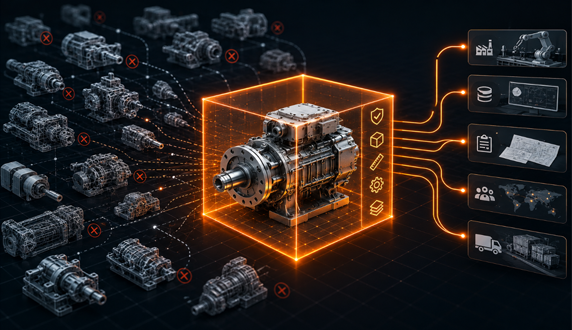
The most effective standardization programs don't rely on engineers remembering standards. They make standards part of the design process itself.

Organizations that achieve long-term success with standardization take a different approach. Rather than treating standards as recommendations that engineers must remember, they embed engineering intent directly into the design process.

In this environment, standards become executable. Best practices become part of model creation. Engineering knowledge is captured as logic rather than documentation alone.

Instead of relying solely on training and discipline, the engineering system actively supports compliance as designs are created.

This shifts standardization from a reactive process to a proactive one.

Rather than identifying noncompliant designs after the fact, the design environment helps guide engineers toward approved solutions from the start. Standards, manufacturing requirements, modular interfaces, and company-specific engineering practices become part of the framework within which products are developed.

The goal is not to restrict creativity or eliminate engineering judgment. Engineers still solve problems, evaluate alternatives, and innovate. The difference is that they do so within a controlled solution space where consistency and engineering intent are built into the process.

Preserving Engineering Knowledge

One of the most significant benefits of effective standardization is knowledge retention.

Every engineering organization possesses valuable expertise developed through years—or even decades—of product development. Unfortunately, much of that knowledge exists as tribal knowledge, undocumented decisions, or experience held by a handful of key individuals.

When those individuals retire, change roles, or leave the organization, critical engineering knowledge often leaves with them.

By capturing engineering intent as rules, logic, and repeatable processes, organizations transform individual expertise into a lasting corporate asset. Knowledge becomes available to future teams, new engineers become productive more quickly, and proven engineering practices can be applied consistently across products and locations.

Instead of relying on individuals to preserve standards, the organization preserves them through the engineering process itself.

Better Engineering Data Creates Better Business Outcomes

Standardization delivers benefits far beyond CAD models. When engineering rules are applied consistently during design creation, the resulting geometry, features, parameters, and metadata become more reliable throughout the product lifecycle.

The data flowing into PDM, PLM, ERP, manufacturing, and downstream systems is more consistent, easier to trust, and safer to reuse.

Rather than spending time managing exceptions, correcting inconsistencies, and validating questionable data, downstream teams can focus on activities that add value.

Better engineering processes produce better engineering data—and better engineering data creates a stronger foundation for the entire enterprise.

Making Standardization Stick

Standardization is not a one-time project. Products evolve, manufacturing methods change, regulations shift, and customer expectations continue to grow. The challenge is not creating standards once—it is maintaining them as the business evolves.

Organizations that succeed over the long term recognize that standards must become part of the engineering process itself rather than something that is checked after the fact.

At SIGMAXIM, this philosophy is embodied in the RulesPerfect™ methodology: a controlled engineering environment in which engineering rules are satisfied during model creation rather than validated after the fact. By embedding standards directly into the design process, organizations can preserve compliance across a full range of product variability while maintaining the flexibility needed to innovate and grow.

Ultimately, standardization doesn't fail because organizations lack standards. It fails because standards are often separated from the design process itself.

When engineering intent is embedded directly into product creation, standards stop being recommendations and become part of how products are designed. The result is greater consistency, less rework, stronger engineering data, and a foundation that can scale as products, teams, and complexity continue to grow.

Learn how leading manufacturers are embedding engineering standards directly into the design process to improve consistency, reduce rework, and preserve engineering knowledge. Explore SIGMAXIM's Creo automation solutions.

 

Engineer-to-Order Doesn't Have to Mean Starting from Scratch

The Common Misconception About ETO Automation

Many Engineer-to-Order (ETO) companies believe automation only works for standardized products.

After all, if every project is unique, how can the design process be automated?

It's a reasonable question—and one we hear often. The reality is that most ETO products contain far more repeatability than many organizations realize.

While the final product may be customized for each customer, the underlying design process often follows familiar patterns. Design standards, calculations, component selections, drawing practices, manufacturing requirements, and configuration decisions are frequently reused from project to project.

Finding the Repeatability

The challenge isn't determining whether automation is possible. The challenge is identifying which parts of the process are truly unique and which parts are repeated every day.

In many organizations, engineers spend a significant amount of time performing tasks that have already been completed countless times before. Although the final design may vary, much of the underlying work remains remarkably consistent.

This is where automation delivers value.

Automating the Repetitive Work

By capturing product knowledge and proven engineering practices, companies can automate repetitive tasks while maintaining the flexibility required for custom products.

Models, assemblies, drawings, bills of material, and manufacturing deliverables can be generated automatically, allowing engineers to focus their expertise where it matters most.

Rather than spending valuable time recreating existing work, engineers can devote more effort to solving customer-specific challenges, improving product performance, and supporting innovation.

Increasing Engineering Capacity

Organizations are often surprised by how much engineering effort is consumed by tasks that add little value to the final product. Repetitive modeling, drawing creation, documentation, and data entry can consume significant resources while contributing little to differentiation.

Automation helps eliminate these bottlenecks by streamlining routine activities and ensuring consistency across projects.

The result is faster turnaround times, improved quality, fewer errors, and increased engineering capacity—all without sacrificing the customization that customers expect.

Flexibility Without Compromise

For many ETO organizations, automation is no longer about standardizing products. It's about standardizing processes, capturing expertise, and allowing engineers to spend more time engineering.

That's why the most successful automation projects don't eliminate flexibility. They make flexibility more efficient.

 
WEBINAR: 
Effortlessly Maintain Legacy Data with Creo Automation

SESSIONS:
Thursday, March 27th, 2025 10am EDT
Thursday, March 27th, 2025  2pm EDT
Thursday, March 27th, 2025 9am EDT (in French)


  • Struggling with the daily grind of maintaining LEGACY DATA & SYSTEMS?
  • Frustrated trying to get all models up to COMPANY STANDARDS?
  • Fed up with COSTLY ERRORS due to human oversight?

Learn innovative Legacy solutions at our upcoming Webinar...

CAD engineers often face the challenges of managing legacy data. This issue encompasses more than just models; it involves intricate systems, databases, multi-site setups, and more.

Dealing with outdated information is a common yet unavoidable daily occurrence. Designers often find themselves working with obsolete models, needing to painstakingly verify all associated components while checking for any discontinued or recalled parts.

Navigating these challenges often involves tedious manual processes that are not only time-consuming but also prone to costly errors. Learn about the power of SIGMAXIM to transform these tasks, making them easily manageable through flexible and efficient automation.


What You'll Learn:


Automating Legacy Data Maintenance:

Learn how SIGMAXIM Automation can simplify legacy data maintenance for all released data, models, and systems, enabling engineers to swiftly perform flexible "Mass Replace" operations. See how easy automation makes it to save time, reduce errors, and ensure your designs stay up-to-date.


Real-World Applications:

Review case studies to gain insights into real-world scenarios where automation has successfully tackled legacy data maintenance challenges.


Interactive Q&A Session:

Get your questions answered by our experts and see how these solutions can be tailored to meet your specific needs.


Who Should Attend:

CAD Managers
CAD Engineers & Designers
CAD Product Development Teams
Any CAD Professionals involved in Data Management


Charles Farah, SIGMAXIM

Maintaining Legacy Data, Models & Systems in Creo

Join Brice Caux, Sr. Application Engineer at SIGMAXIM, as he presents innovative automation solutions for maintaining legacy models, systems, databases, and more.


Learn how to reduce errors, increase standardization, and free up engineering time to work on more strategic tasks with SIGMAXIM Automation. Created exclusively for CREO users!

.

  • New to MBD

  • Mid-Journey MBD

  • Advanced MBD Users


  • Session 1

    REGISTER HERE

    Thu, March 27th @ 9am - 9:45am EDT
    (14:00-14:45 CET)

    << FRENCH >>

  • Session 2

    REGISTER HERE

    Thu, March 27th @ 10am - 10:45am EDT

    ENGLISH

  • Session 3

    REGISTER HERE

    Thu, March 27th @ 2pm - 2:45pm EDT

    ENGLISH


Read more …WEBINAR: Maintaining Legacy Data, Models & Systems with Creo Automation


WEBINAR: 
SHEET METAL INNOVATIVE TOOLBOX:
Boost Efficiency with Creo Automation

SESSIONS:
Wednesday, October 23 10 AM EST
Wednesday, October 23  2 PM EST

As industries increasingly rely on Sheet Metal for a wide range of applications—from intricate components to durable enclosures—the demand for efficient and innovative design solutions continues to grow. However, with this growth comes a unique set of challenges.

🌟 𝗦𝗛𝗘𝗘𝗧 𝗠𝗘𝗧𝗔𝗟 𝗜𝗡𝗡𝗢𝗩𝗔𝗧𝗜𝗩𝗘 𝗧𝗢𝗢𝗟𝗕𝗢𝗫 - 𝗕𝗼𝗼𝘀𝘁 𝗘𝗳𝗳𝗶𝗰𝗶𝗲𝗻𝗰𝘆 𝘄𝗶𝘁𝗵 𝗖𝗿𝗲𝗼 𝗔𝘂𝘁𝗼𝗺𝗮𝘁𝗶𝗼𝗻 🌟 

Join SIGMAXIM’s expert, Gilles Combette, as he showcases how to harness the transformative power of SIGMAXIM’s Creo Automation for Sheet Metal design using a flexible toolbox approach to help tackle these challenges.


Explore how our SHEET METAL INNOVATION TOOLBOX can help with the following topics...

👉 𝗦𝘁𝗮𝗻𝗱𝗮𝗿𝗱 𝗧𝗲𝗺𝗽𝗹𝗮𝘁𝗲𝘀
Ensure consistent design through manufacturing process by leveraging your own in-house standards.

👉 𝗦𝗮𝗳𝗲𝘁𝘆
Eliminate risk of injuries for both workers and end-users with specific features.

👉 𝗖𝗼𝘀𝘁 & 𝗠𝗮𝗻𝘂𝗳𝗮𝗰𝘁𝘂𝗿𝗮𝗯𝗶𝗹𝗶𝘁𝘆 (𝗗𝗙𝗠𝗔)
Optimize material usage, reduce waste, and simplify assembly steps to save costs and improve production efficiency.

👉 𝗜𝗻𝗱𝘂𝘀𝘁𝗿𝘆 𝗦𝘁𝗮𝗻𝗱𝗮𝗿𝗱𝘀
Follow standards like using PEM fasteners to ensure correct alignment and strong, reliable assemblies.


👉  Sub-assemblies across company
Configurators for common items


👉  Make or buy and Digital continuity
Ensure smooth process docs preparation / Bending, Punching, Laser


...and much more!


REAL-WORLD APPLICATIONS

Learn valuable insights into the specialized tools we've developed for our clients, like Groupe Atlantic, a global leader in heating and cooling. Take a deep dive into how they have successfully leveraged SIGMAXIM’s tools in their sheet metal design processes, and learn to replicate the impressive benefits they have achieved with automation.


Join us and take your Creo Sheet Metal design to the next level.


Charles Farah, SIGMAXIM


Join Gilles Combette, European Technical Director at SIGMAXIM,
as he presents innovative Sheet Metal automation solutions.

.

  • New to MBD

  • Mid-Journey MBD

  • Advanced MBD Users


  • Session 1

    REGISTER HERE

    Wed, October 23rd @ 10 AM EST
    (16:00 CET)

  • Session 2

    REGISTER HERE

    Wed, October 23rd @ 2 PM EST
    (20:00 CET)


Read more …WEBINAR: Sheet Metal Innovation Toolbox